
Importance of Pelvic Floor Physiotherapy in Gynaecological Cancer Care
Surgery for gynaecological cancers, including endometrial, cervical, ovarian and vulvar cancers, can affect more than just the surgical area. Changes in bladder control, bowel function, sexual function, core strength and overall energy levels are common after treatment. These are normal physiological responses to surgery and, when utilised, radiation and immunotherapies.
At Embrace Physio + Pilates, we see pelvic health as an important part of your journey, not an afterthought. Pelvic floor physiotherapy provides structured support both before surgery and after, helping you feel prepared, informed and empowered.

What can gynaecological surgery impact?
Gynaecological surgery may involve removal of reproductive organs, lymph nodes or surrounding tissue. Scar formation, changes in muscle coordination and temporary nerve irritation can influence how the pelvic floor functions. This may present as urinary leakage, urgency, altered bowel control, vaginal heaviness, vaginal dryness, or pain with intercourse. Early support has the ability to make a meaningful difference in how these symptoms resolve.
Prehab and rehab:
Prehabilitation involves preparing your body before surgery. Learning how to correctly activate and relax the pelvic floor before treatment helps build awareness and coordination, making your recovery smoother. Strengthening your body ahead of time also supports overall resilience and confidence going into surgery.
After surgery, rehabilitation focuses on restoring control and rebuilding strength in a gradual and supported way. Pelvic floor muscle training improves bladder control and coordination, while scar mobility work and gentle tissue rehabilitation support comfort and healing. Where radiation is involved, we can guide vaginal dilator therapy and relaxation techniques to reduce vaginal stenosis and support a safe return to intimacy.
Recovery is not only about healing tissues. It is about restoring function. Fatigue and deconditioning are common after cancer treatment. International guidelines recognise exercise as an essential part of cancer care, supporting strength, energy levels and quality of life. Our approach integrates pelvic floor retraining with breath-led core coordination and progressive strength work, so the whole body is supported. We implement a combination of strength, mobility, and tailored rehabilitation exercises as part of your recovery.
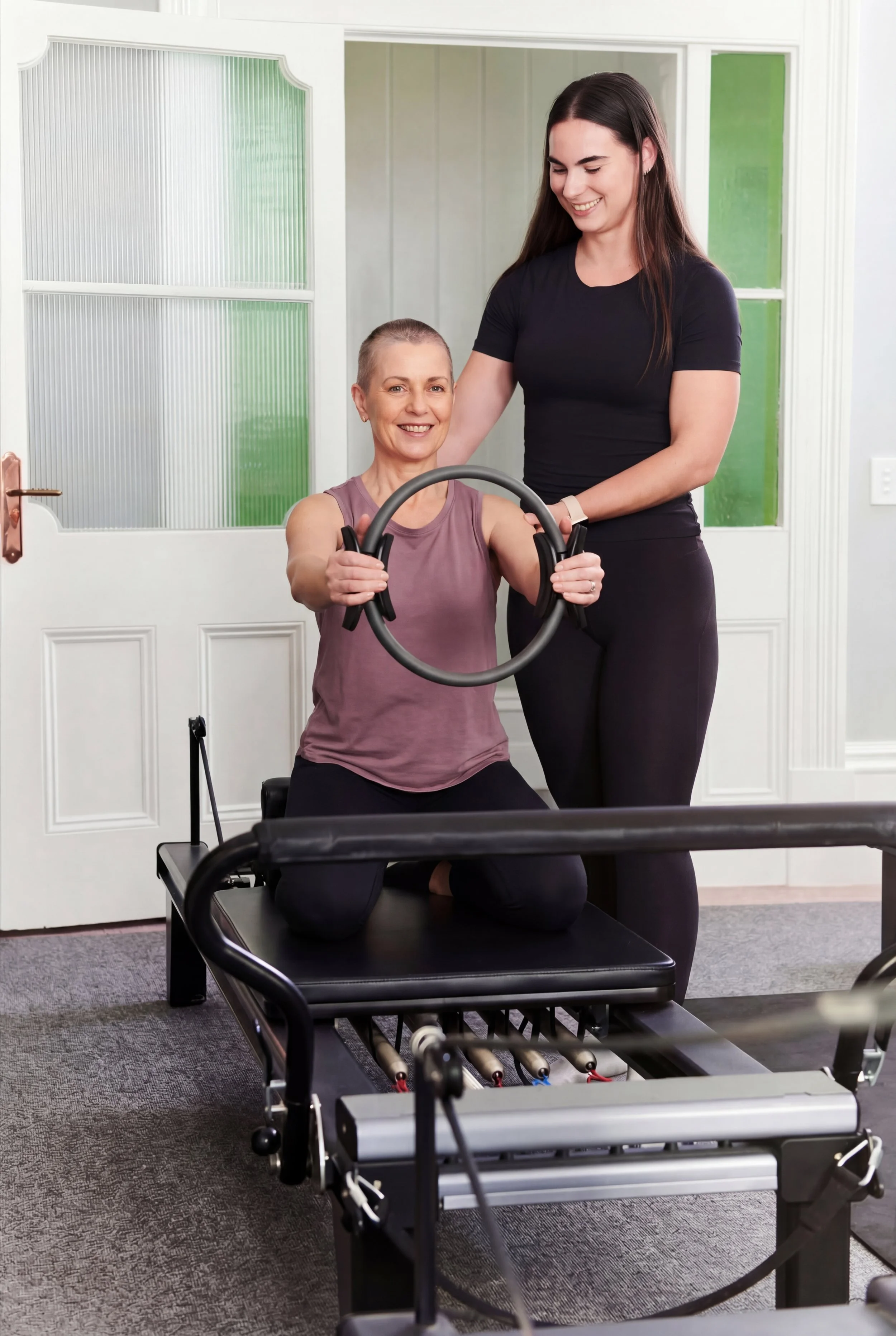
Your support system is here at Embrace physio + pilates
At Embrace, we understand that this phase of life can feel physically and emotionally demanding. Our goal is to provide calm, individualised care that helps you focus on what you can control. With the right guidance, recovery becomes proactive rather than reactive.
You do not need to wait and see if symptoms settle. Early, supportive rehabilitation can help you regain bladder control, reduce pain, improve sexual comfort and rebuild confidence.
We are here to support you, before surgery, after treatment and as you return to daily life, with strength, clarity and compassion. Initial appointments to begin your care journey with us can be booked here.
Author: Daphné Auclair