
embrace performance
pelvic health physio for athletes

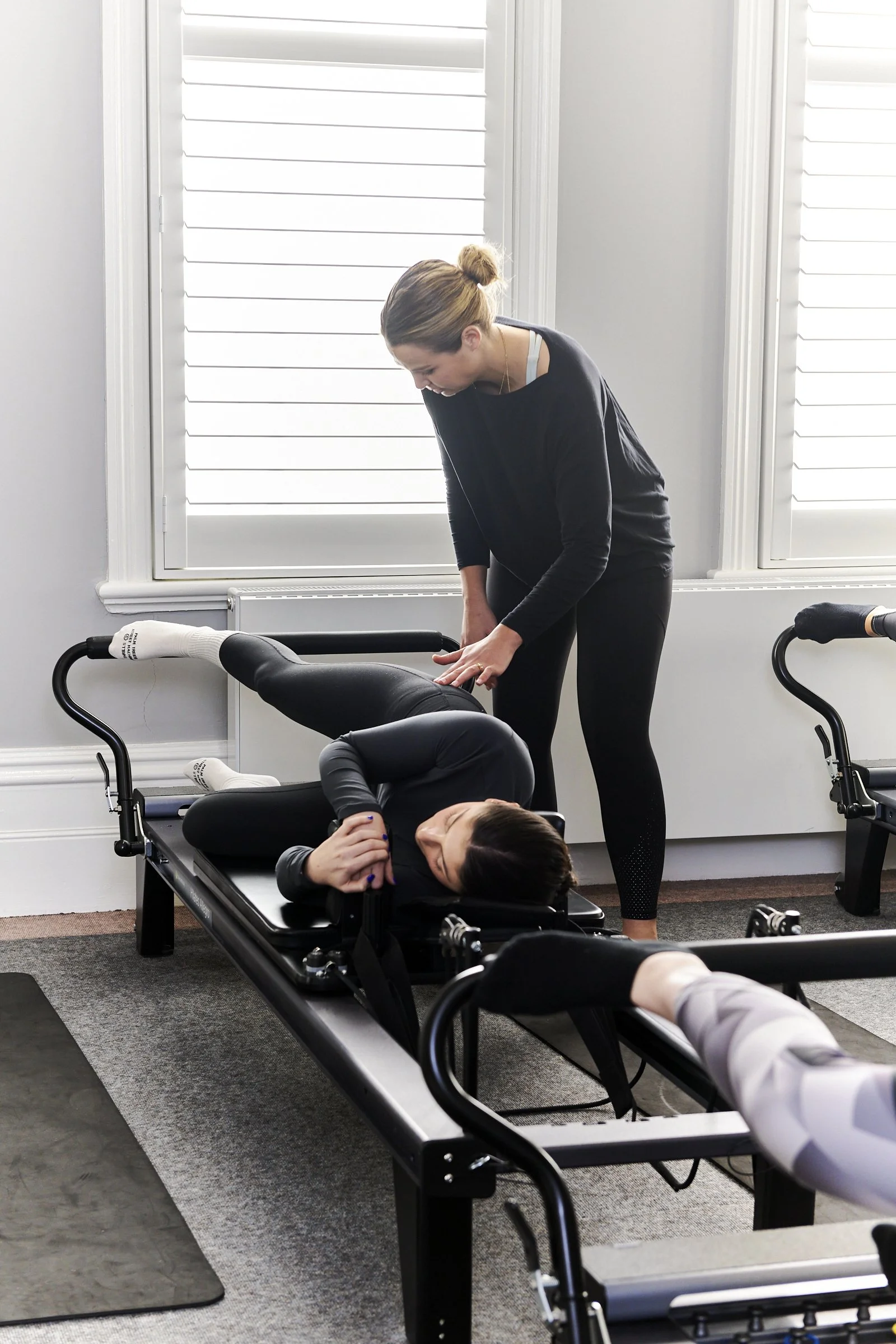
Embrace Performance is a specialised pelvic health physio service for women who run, lift, train and compete. Part of Embrace Physio + Pilates in Armadale, Melbourne, delivered by physios qualified in both pelvic health and sports rehabilitation.
If you have been leaking mid-lift, skipping the box jumps, or carrying hip pain that your strength work and regular physio have not settled, this is where we look at your pelvic floor alongside everything else. It is likely treatable, and the conversation is easier than you think.
We build a plan that works around your training, rather than asking you to stop.
why this matters
1 in 3
women experience pelvic floor symptoms like leaking during training or competition1.¹
Almost 1 in 2
women with pelvic floor symptoms stopped a form of exercise they used to do.²
almost 1 in 3
women who had never given birth had stopped an exercise because of pelvic floor symptoms.³
less than 1 in 4
health and exercise professionals screen women for pelvic floor symptoms, and high-impact athletes are among the least likely to be asked.⁴
Most athletes do not stop when symptoms start. They change how they train instead. They drop the double-unders, stop short of the heavy set, plan runs around toilets, or quietly stop entering events. Left alone, symptoms tend to get worse.
None of that is necessary. Pelvic floor symptoms respond well to the right assessment and a properly built plan.
who embrace performance is for

Embrace Performance is for women and people with a uterus who train regularly, at any level. You do not need to be competing, and you do not need to call yourself an athlete.
Runners, from parkrun through to marathon and trail
Team sport players at club and representative level, across field, court and water
Endurance and individual athletes, including swimmers, cyclists, triathletes and rowers
Functional fitness and CrossFit athletes, and anyone training for HYROX
Weightlifters and strength athletes, and general gym-based strength training
Dancers, ballet dancers and gymnasts, and other artistic and aesthetic sports
Combat and climbing athletes
Postpartum athletes returning to running, lifting and team sport
If you train regularly and something is getting in the way, you are in the right place.
what we treat
-
Stress urinary incontinence. You leak on a box jump, a heavy squat, a sprint, or somewhere around kilometre six. It is common, it is treatable, and it is not something you have to train around.
-
Faecal urgency and faecal incontinence. A sudden, strong urge at a predictable point in a run, and sometimes you do not make it. Runners tend to assume this is just what long distance does. It is not.
-
Pelvic organ prolapse. Heaviness or bulging after training, often worse at the end of the day or the end of the week. Symptoms frequently respond well to loading the pelvic floor properly rather than avoiding load.
-
You have done the rehab and been consistent with your strength work, and the pain is still there. When musculoskeletal treatment has not shifted it, the pelvic floor is often the part that was never assessed.
-
Chronic pelvic pain. Dull, sharp, aching or crampy pain through the abdomen, low back and pelvis, during training or in the hours afterwards.
-
Pain severe enough that you need medication to get through it, or severe enough that you skip training. Cycle-related pain, including endometriosis and adenomyosis, can be managed alongside your training rather than in spite of it.
-
You want to get back to running or lifting and you do not know where to start or what is safe. We map the return, week by week.
-
Diastasis rectus abdominis. Your stomach domes when you brace or sit up, and your core feels weak no matter how much you train it.

your first appointment

We talk. Your bladder and bowel habits, your cycle, your pain, your training history and your current load. This is a conversation, not an interrogation, and there is nothing you can say that we have not heard before.
We assess. How your pelvic floor is coping with the demands of your sport, along with your abdominals, glutes, hips and low back. We use real-time ultrasound, which lets us assess your pelvic floor externally, over clothing. Internal assessment is an option, never a requirement.
We build the plan. You leave with a plan that fits the training you are already doing, integrated into your existing program rather than added on top of it. In almost every case you keep training while we work on the cause, and we adjust load only where it is needed.

how this is different
A standard physio or sports physio appointment assesses the muscle or the joint. Pelvic floor assessment is not part of standard musculoskeletal or sports physiotherapy training, so it is often the part that has never been looked at.
Embrace Performance physios hold postgraduate qualifications in pelvic health and work in sports and musculoskeletal rehabilitation. That combination means we assess how your pelvic floor is handling your sport, and build the return-to-load plan around both at once, instead of treating them as two problems in two clinics.
It also means we are not going to tell you to do Kegels and hope. Pelvic floor rehabilitation for an athlete looks like progressive loading, coordination under fatigue, and integration with the training you already do.
common questions
-
No. You can book directly with Embrace Performance. A GP referral is only needed if you want to claim a Medicare rebate.
-
Yes, through private health extras cover that includes physiotherapy. A partial Medicare rebate may be available if your GP has prepared a Chronic Condition Management Plan for you. See our current price list here.
-
Only if you are comfortable with this. We always offer more than one way to assess your pelvic floor, including external assessment over clothing using real-time ultrasound. You will never feel pressure either way.
-
Usually not. The goal is to keep you training while we treat the underlying issue, adjusting load only where and if it is needed. Being told to stop is the most common worry athletes bring to a first appointment, and it is rarely the answer.
-
Yes. If you run, lift, do classes or play sport and something is getting in the way, this is for you.
-
Embrace Performance is sport-specific. The assessment and the return-to-load plan are built around the demands of your training, not around everyday function, and it is delivered by physios who work across both pelvic health and sports rehabilitation.
-
Only if you want us to. With your consent we can share findings with your GP, team medical staff, coach or S&C coach. If you would rather your appointment stay entirely confidential, including from your team, it does, and that changes nothing about your care.
-
Embrace Performance is for women and people with a uterus.
-
Embrace Performance appointments are available at Armadale, our main clinic, as well as Caulfield South.
We see athletes from across Stonnington, Glen Eira and Boroondara, including Armadale, Malvern, Toorak, South Yarra, Windsor, Prahran, Caulfield, Hawthorn and Glen Iris.
¹ Dakic et al., Sports Medicine Open, 2023
², ³ Survey of 4,556 Australian women. Dakic et al., Journal of Science and Medicine in Sport, 2021
⁴ Survey of 636 Australian health and exercise professionals. Dakic et al., Journal of Science and Medicine in Sport, 2023